Biomes: Difference between revisions
Project Rebearth wiki
Program Sam (talk | contribs) Created page with "= Biomes = In '''Project Rebearth''', the world is divided into large-scale '''biomes''' that determine which resources can be produced in a given location. Biomes are derived from real-world climate data and are consistent across the full 1:1 replica of Earth. Where you build directly affects what your buildings can produce and how efficiently your settlement can grow. Each biome contains multiple climate zones, representing more specific ecological regions wi..." |
No edit summary |
||
| (11 intermediate revisions by 2 users not shown) | |||
| Line 1: | Line 1: | ||
In '''Project Rebearth''', the world is divided into four '''biomes''' that determine which [[resources]] are available, how much [[buildings]] cost to construct, and how efficiently settlements can grow. Biomes are derived from real-world climate data based on the [[Wikipedia:List of terrestrial ecoregions (WWF)|WWF terrestrial ecoregions]], mapped onto a full 1:1 replica of [[Earth]]. Where a player builds directly affects production rates, construction costs, and housing upkeep. | |||
Each biome contains multiple climate zones representing more specific ecological regions. The climate zones also influence the vegetation visible on the surface. | |||
<gallery mode="packed"> | |||
File:EarthBiome.png|The [[Earth Biome]]|link=Earth Biome | |||
File:WoodBiome.png|The [[Wood Biome]]|link=Wood Biome | |||
File:StoneBiome.png|The [[Stone Biome]]|link=Stone Biome | |||
</gallery> | |||
== Overview == | == Overview == | ||
<div class="rb-table-frame"><div class="rb-table-inner"> | |||
{| class="rb-table" | |||
! Biome !! Construction Material !! Resource Focus !! Description | |||
{| class=" | |||
! Biome !! Resource Focus !! Description | |||
|- | |- | ||
| [[Wood Biome]] || Wood | | [[Wood Biome]] || {{Icon|Wood}} || {{Icon|Wood}} production || Forested regions - tropical, temperate, and subtropical | ||
|- | |- | ||
| [[Stone Biome]] || Stone | | [[Stone Biome]] || {{Icon|Stone}} || {{Icon|Stone}} and {{Icon|Ore}} production || Mountainous, boreal, and tundra regions | ||
|- | |- | ||
| [[Earth Biome]] || Earth | | [[Earth Biome]] || {{Icon|Earth}} || {{Icon|Earth}} and {{Icon|Glass}} production || Arid, grassland, and Mediterranean regions | ||
|- | |- | ||
| [[Arctic Biome]] || | | [[Arctic Biome]] || {{Icon|Wood}} (2× cost) || No raw resource extraction || Extreme polar regions | ||
|} | |} | ||
</div></div> | |||
All resources can be found in every biome through [[trade]] and [[Expeditions|expeditions]], but the efficiency of local production varies significantly depending on the biome. No single biome is fully self-sufficient; successful players specialize based on their environment and rely on trade and global cooperation to access missing resources. | |||
=== Construction === | |||
In the Wood, Stone, and Earth biomes, buildings cost the biome's primary resource ({{Icon|Wood}}, {{Icon|Stone}}, or {{Icon|Earth}} respectively). In the [[Arctic Biome]], buildings cost {{Icon|Wood}} at double the normal amount. | |||
=== Housing upkeep === | |||
All housing buildings consume {{Icon|Wood}} and {{Icon|Food}} daily. {{Icon|Food}} consumption is identical across all biomes for a given housing tier. {{Icon|Wood}} consumption, however, varies dramatically: the [[Earth Biome]] reduces {{Icon|Wood}} upkeep to roughly one-tenth of normal, while the [[Arctic Biome]] doubles it. | |||
=== | === Resource production === | ||
Each biome has distinct production strengths: | |||
* The [[Wood Biome]] produces the most {{Icon|Wood}} from [[Woodcutter]]s and has balanced yields from other extraction buildings. | |||
* The [[Stone Biome]] has the highest {{Icon|Stone}} output from [[Stone Crane]]s and the highest {{Icon|Ore}} yield from the [[Iron Mine]]. | |||
* The [[Earth Biome]] has the highest {{Icon|Earth}} output from [[Clay Crane]]s and [[Claypit]]s, making it ideal for {{Icon|Glass}} production chains via the [[Glassworks]]. | |||
* The [[Arctic Biome]] has no access to raw resource extraction buildings ([[Woodcutter]], [[Quarry]], [[Claypit]], [[Iron Mine]], [[Foraging Hut]], [[Glassworks]], and [[Field]]s are all unavailable). Food processing buildings such as the [[Fishery]], [[Windmill]], [[Bakery]], [[Creamery]], and [[Brewery]] still operate normally. | |||
=== | ==Changelog== | ||
{{Changelog}} | |||
== See also == | |||
* [[Wood Biome]] | |||
* [[Stone Biome]] | |||
* [[Earth Biome]] | |||
* | * [[Arctic Biome]] | ||
* | * [[Buildings]] | ||
* | * [[Resources]] | ||
Earth | |||
* | |||
{{Navbox}} | |||
[[Category:Biomes]] | |||
Latest revision as of 14:07, 4 April 2026
In Project Rebearth, the world is divided into four biomes that determine which resources are available, how much buildings cost to construct, and how efficiently settlements can grow. Biomes are derived from real-world climate data based on the WWF terrestrial ecoregions, mapped onto a full 1:1 replica of Earth. Where a player builds directly affects production rates, construction costs, and housing upkeep.
Each biome contains multiple climate zones representing more specific ecological regions. The climate zones also influence the vegetation visible on the surface.
-
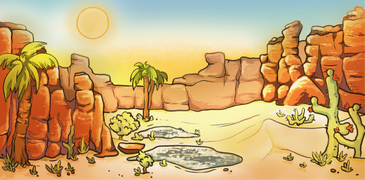 The Earth Biome
 -
 The Wood Biome
 -
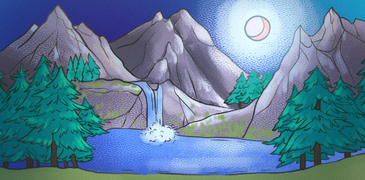 The Stone Biome
Overview
[edit]| Biome | Construction Material | Resource Focus | Description |
|---|---|---|---|
| Wood Biome |  Wood Wood |
Wood production |
Forested regions - tropical, temperate, and subtropical |
| Stone Biome |  Stone Stone |
Stone and  Ore production Ore production |
Mountainous, boreal, and tundra regions |
| Earth Biome |  Earth Earth |
Earth and  Glass production Glass production |
Arid, grassland, and Mediterranean regions |
| Arctic Biome | Wood (2× cost) |
No raw resource extraction | Extreme polar regions |
All resources can be found in every biome through trade and expeditions, but the efficiency of local production varies significantly depending on the biome. No single biome is fully self-sufficient; successful players specialize based on their environment and rely on trade and global cooperation to access missing resources.
Construction
[edit]In the Wood, Stone, and Earth biomes, buildings cost the biome's primary resource ( Wood, Stone, or Earth respectively). In the Arctic Biome, buildings cost Wood at double the normal amount.
Housing upkeep
[edit]All housing buildings consume Wood and  Food daily. Food consumption is identical across all biomes for a given housing tier. Wood consumption, however, varies dramatically: the Earth Biome reduces Wood upkeep to roughly one-tenth of normal, while the Arctic Biome doubles it.
Resource production
[edit]Each biome has distinct production strengths:
- The Wood Biome produces the most Wood from Woodcutters and has balanced yields from other extraction buildings.
- The Stone Biome has the highest Stone output from Stone Cranes and the highest Ore yield from the Iron Mine.
- The Earth Biome has the highest Earth output from Clay Cranes and Claypits, making it ideal for Glass production chains via the Glassworks.
- The Arctic Biome has no access to raw resource extraction buildings (Woodcutter, Quarry, Claypit, Iron Mine, Foraging Hut, Glassworks, and Fields are all unavailable). Food processing buildings such as the Fishery, Windmill, Bakery, Creamery, and Brewery still operate normally.


